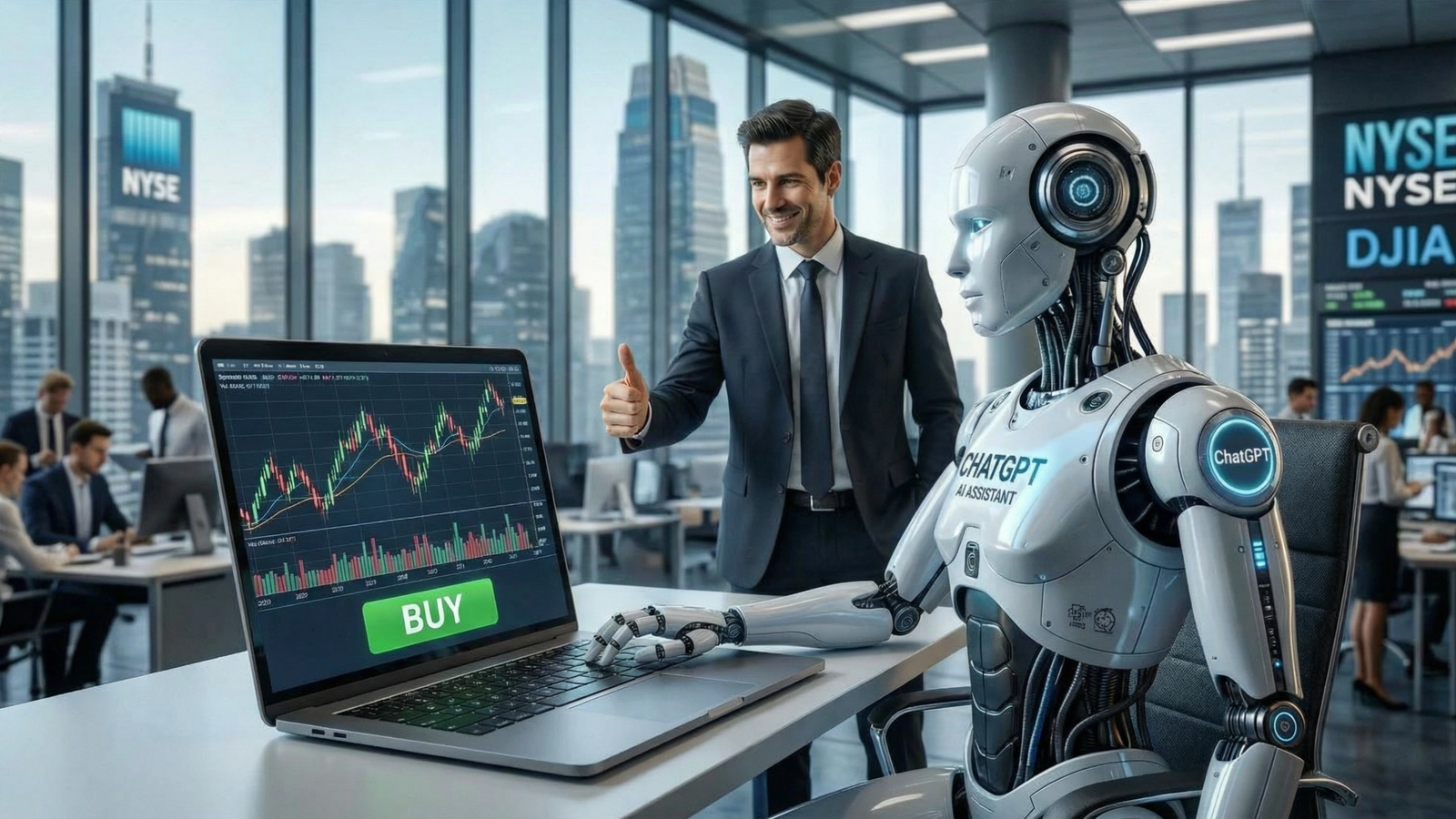
If you’ve been following the financial world, you’ve likely seen that algorithms now handle a large part of trading. Automated trading with artificial intelligence is no longer a futuristic concept. It’s already here. In fact, IMARC Group’s 2025 data shows that algorithmic and high-frequency strategies account for about 60-70% of trading volume in major global equity markets.
It’s a mix of good and bad. AI trading is faster, cheaper, and more accessible, but it can fail badly, and accountability isn’t always clear when things go wrong.
Let’s take a closer look at where AI trading shines and where it falls short.
What AI Actually Does Well in Trading
It’s Ridiculously Fast
These systems operate in milliseconds (thousandths of a second). AI trading can process huge amounts of data, spot opportunities, and execute trades almost instantly. This speed is important because it reduces ‘slippage,’ the difference between the expected price of a trade and the actual price at which it is executed.
High-frequency trading firms exploit small price differences between exchanges, often measured in fractions of a second. This activity has boosted market liquidity, which means there are more buyers and sellers, making it easier to buy and sell quickly.
It Doesn’t Panic
Here’s the thing about human traders: they’re human. They get scared during crashes, greedy during rallies, and make dumb decisions when their emotions take over. AI doesn’t have that problem. It just follows its rules and sticks to the plan, even when the market is going haywire. That consistency is genuinely valuable when things get volatile.
It Can Process Way More Information Than Any Person
A human analyst would need many people to read thousands of articles, scan social sentiment, track macro data, and cross-reference with price patterns. AI can do this in moments.
Natural language processing, a type of AI that helps computers understand and interpret human language, lets these systems read earnings reports and news stories in real time and adjust strategies on the fly. It’s a level of data crunching that just isn’t possible for a person, no matter how smart they are.
It’s Cheaper to Run
Once built and trained, an AI trading system works nonstop. It doesn’t take breaks, vacations, or engage in negotiations. This saves institutions money, sometimes leading to lower fees for regular investors via robo-advisors and automated platforms.
It’s Opened the Door for Regular People
Tools like robo-advisors and trading apps let everyday investors use sophisticated strategies once reserved for hedge funds.
Where Things Get Sketchy
Flash Crashes Are a Real Thing
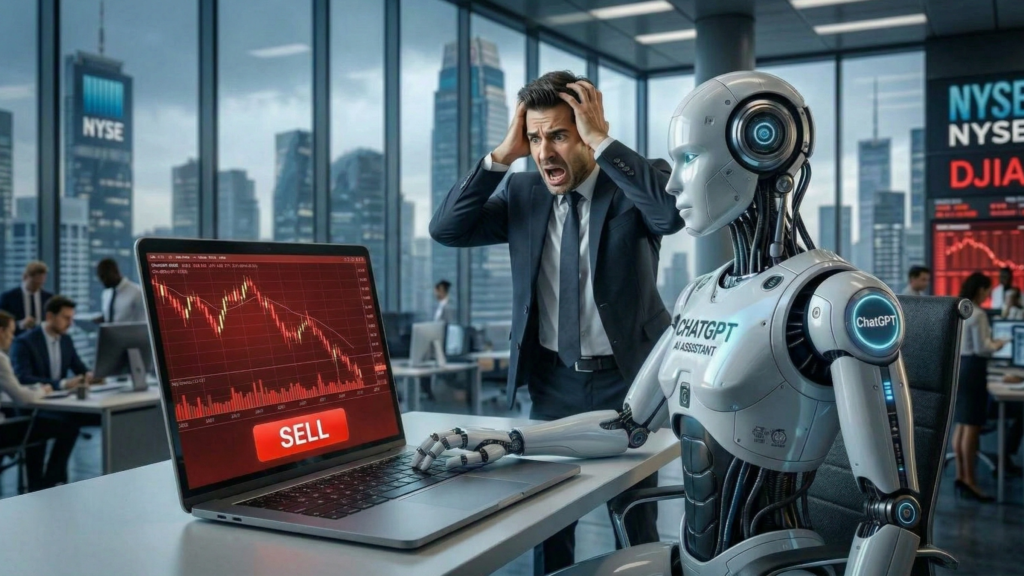
During the 2010 Flash Crash, automated trading wiped out about $1 trillion in minutes. The market rebounded quickly, but it showed that when algorithms react together, things can spiral fast. Safeguards are better now, but the risk persists.
The Overfitting Problem
AI models learn from historical data, which sounds great until you realize that markets don’t always repeat themselves. A model can look amazing in back tests (basically practice runs using past data), but completely fall apart when it hits real, unpredictable conditions. This happens when the model essentially memorizes the past rather than learning useful patterns. It’s a sneaky problem that can lead to serious losses.
Nobody Can Explain What the AI Is Thinking
Many advanced trading AIs are “black boxes.” Even their creators can’t always explain their decisions. That’s a big problem for regulators when things go wrong, because “the AI did it” isn’t enough.
It Can Be Used to Cheat
Algorithms can be used in both legitimate and manipulative ways in markets. Practices such as spoofing, placing orders that are not intended to be executed, and front-running, acting ahead of large orders to potentially gain an advantage, may be facilitated at scale through AI. Regulators are attempting to address these behaviors through laws like the U.S. Dodd-Frank Act and MiFID II in Europe, but keeping pace with evolving algorithms remains an ongoing challenge.
The Rules Haven’t Caught Up Yet
Questions remain, such as whether AI should be permitted to trade using alternative internet-sourced data and whether disparities in access to advanced AI tools are fair. These are significant ethical considerations requiring ongoing regulatory development. The framework is evolving, which introduces uncertainty.
So, Who’s Actually Responsible When AI Messes Up?
Here’s the tricky part: AI can’t be held accountable. It’s not a person. It has no legal standing or consequences. So, the blame falls elsewhere.
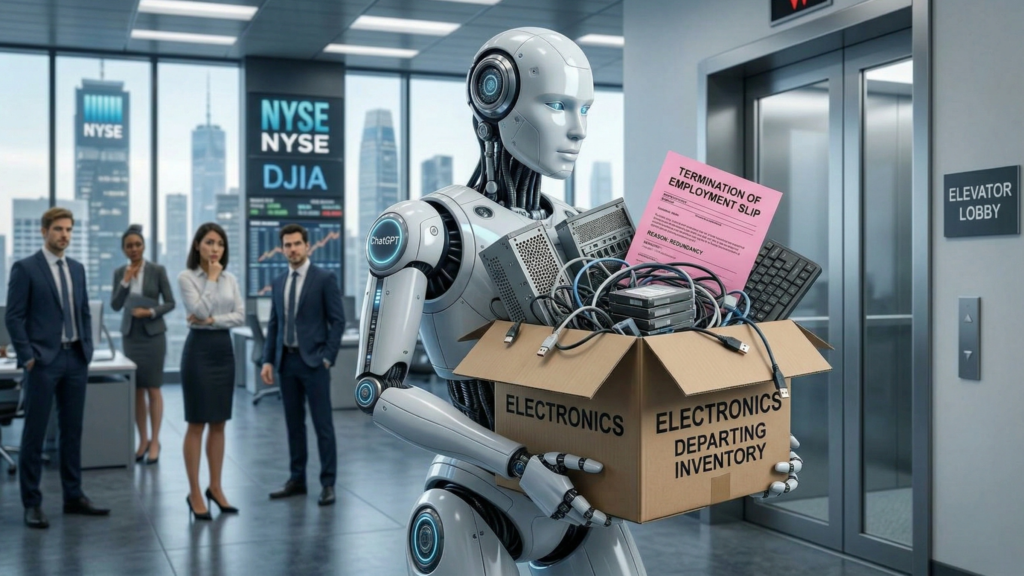
Companies that build and deploy these systems bear the greatest responsibility. They must rigorously test models, add fail-safes like circuit breakers, and ensure compliance with regulations. If your algorithm crashes the market, you can’t just say, “The computer did it.”
Regulators and policymakers need to step up, too. Agencies like the SEC and CFTC must set clear rules on transparency, risk management, and accountability for AI systems. The EU’s AI Act is a step in that direction, with specific provisions for high-risk AI, which could absolutely include trading algorithms.
There is debate over whether advanced AI may eventually be recognized as an autonomous entity with its own responsibilities. At present, however, the law places responsibility squarely on the individuals involved in the process.
Regular investors also share responsibility. If you use an AI trading app, know what it does and what the risks are. Blind trust is risky.
What’s Coming Next
AI in trading is here to stay and will get more advanced. Watch for these trends:
- Explainable AI aims to make these black-box models transparent. If firms and regulators understand why an AI made a decision, accountability improves.
- Regulatory sandboxes allow firms to test AI trading systems under supervision before deploying them in real markets. It’s a smart move.
- Human-AI collaboration could be the best approach. Instead of fully autonomous AI traders, the future may pair machine speed with human judgment and intuition.
The Bottom Line
AI trading is genuinely impressive. It’s fast, efficient, and it’s made markets more accessible to regular people. But it also comes with real risks, from flash crashes to ethical gray areas, and the question of who takes the blame when things go sideways still doesn’t have a clean answer.
The responsibility is shared. Developers need to build carefully. Regulators need to keep pace. Investors need to stay informed. And all of us need to keep having honest conversations about what we want AI’s role in finance to look like.
This isn’t just about technology. It’s about trust, fairness, and the financial system we want to build. The decisions we make now will shape markets for years to come.
Bibliography
IMARC Group. Algorithmic Trading Market Size, Share & Forecast to 2034. 2025.
Dodd-Frank Wall Street Reform and Consumer Protection Act. Public Law 111-203. 124 Stat. 1376. 2010. https://www.congress.gov/bill/111th-congress/house-bill/4173/text.
European Parliament and Council of the European Union. Directive 2014/65/EU of 15 May 2014 on Markets in Financial Instruments (MiFID II). Official Journal of the European Union L 173. June 12, 2014. https://eur-lex.europa.eu/legal-content/EN/TXT/?uri=celex:32014L0065.
European Parliament and Council of the European Union. Regulation (EU) 2024/1689 of 13 June 2024 Laying Down Harmonized Rules on Artificial Intelligence (AI Act). Official Journal of the European Union. July 12, 2024. https://digital-strategy.ec.europa.eu/en/policies/regulatory-framework-ai.
Kirilenko, Andrei, Albert S. Kyle, Mehrdad Samadi, and Tugkan Tuzun. “The Flash Crash: High-Frequency Trading in an Electronic Market.” Journal of Finance 72, no. 3 (2017): 967–98.
U.S. Commodity Futures Trading Commission and U.S. Securities and Exchange Commission. Findings Regarding the Market Events of May 6, 2010: Report of the Staffs of the CFTC and SEC to the Joint Advisory Committee on Emerging Regulatory Issues. September 30, 2010. https://www.sec.gov/news/studies/2010/marketevents-report.pdf.

Be First to Comment