

TLDR: 7 Warning Signs (and What to Do About Them)
Sales are up, but something feels off? Here’s the short version.
Related: For Part 1 (full version) use this link.
Warning Sign #1 – You’re offering credit to customers. Fix it: Run credit checks, put terms in writing, and offer small discounts for early payment. Net-30 means net-30.
Warning Sign #2 – Receivables are growing faster than revenue. Fix it: Track your Days Sales Outstanding every month. Follow up on late payments on day 31, not day 75. Repeat offenders pay upfront or don’t order.
Warning Sign #3 – You’re counting one-time gains as real revenue. Fix it: Flag every non-recurring item separately in your financials. If it can’t repeat next year on its own, it doesn’t belong in your operating revenue.
Warning Sign #4 – Profit margins are shrinking. Stop racing to the bottom on price. Invest in what makes you worth more. Run a cost audit and find where margin is quietly leaking.
Warning Sign #5 – Expenses are outpacing revenue. Fix it: Do a quarterly expense audit. If a cost isn’t generating revenue or protecting the business, cut it. Hire for demand that exists, not demand you’re hoping for.
Warning Sign #6 – Inventory is piling up. Fix it: Track your inventory turnover ratio and order based on actual sales data, not projections. Have a clearance plan ready before shelves start to overflow.
Warning Sign #7 – One big client is carrying your revenue. If any single client accounts for more than 25-30% of your revenue, that’s a risk. Keep your pipeline active and set a concrete goal to diversify within 18 months.
The one-line version: Measure more, act sooner, and never confuse a good month with a healthy business.
Full Version
DISCLAIMER: Please consult a qualified financial advisor or accountant before implementing any of these solutions. They are shown here for educational purposes only and should not be misconstrued as advice given.
After spotting the warning signs, what steps can you take to stay ahead of trouble? Here’s how to address each issue before it becomes a serious problem.
These solutions are not magic. They require discipline, some uncomfortable conversations, and a willingness to look at your business with clear eyes. But the good news? Every one of these problems is fixable, often before they do serious damage.
Guideline #1 – Set Clear Credit Terms and Actually Enforce Them
Offering credit to customers makes sense as a business decision, but it is important to establish a process to manage risk effectively.
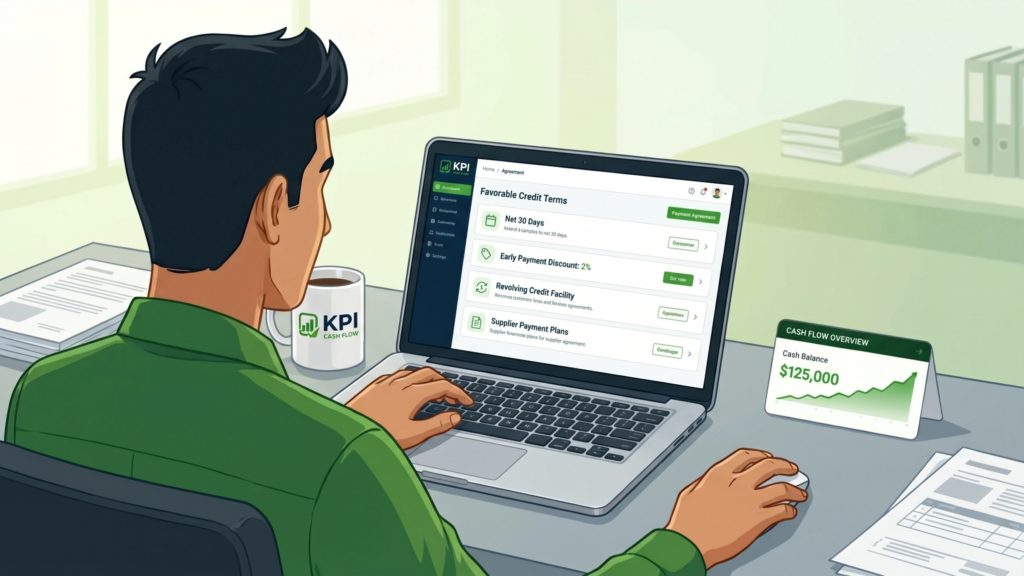
Start by running a credit check on any new client before you agree to payment terms. Many businesses skip this step because they don’t want to seem distrustful. But it’s likely these customers are doing the very same for their customers, so you have nothing to feel bad about when checking their credit. Most businesses run credit checks these days.
Next, put your terms in writing and ensure both parties sign off. Net-30 should mean net-30, not “whenever they get around to it.” Net-30 refers to payment being due in full 30 days from the invoice date. Consider offering a small discount for early payment, something like 2% off if they pay within 10 days. It’s a modest incentive, but it works surprisingly well for improving cash timing.
For larger clients who push for longer terms, negotiate milestone-based payments. A deposit up front, another payment at delivery, and the balance within 30 days is a reasonable structure that keeps cash moving without losing the deal.
Guideline #2 – Monitor Days Sales Outstanding Every Month
When accounts receivable is growing faster than revenue, you need a number to watch. That number is Days Sales Outstanding, or DSO.

DSO tells you, on average, how long it takes customers to pay you. DSO stands for Days Sales Outstanding, which is a calculation that shows the average number of days it takes to collect payment after a sale. The formula is simple: divide your accounts receivable by your average daily revenue. If that number is climbing month over month, customers are paying more slowly. That’s your early warning.
Once you know your DSO, set a target and measure against it consistently. If a customer blows past their due date, follow up immediately. Not after 60 days. Not at the end of the quarter. Immediately. A polite but firm email on day 31 sends a very different message than one sent on day 75.
For clients who consistently pay late, start requiring partial payment before shipping the next order. Losing a client who does not respect terms is rarely a true loss.
Guideline #3 – Separate One-Time Gains from Real Revenue
This step requires honest assessment. Significant financial events, such as asset sales, tax benefits, or insurance settlements, may appear to be revenue, but they are not.
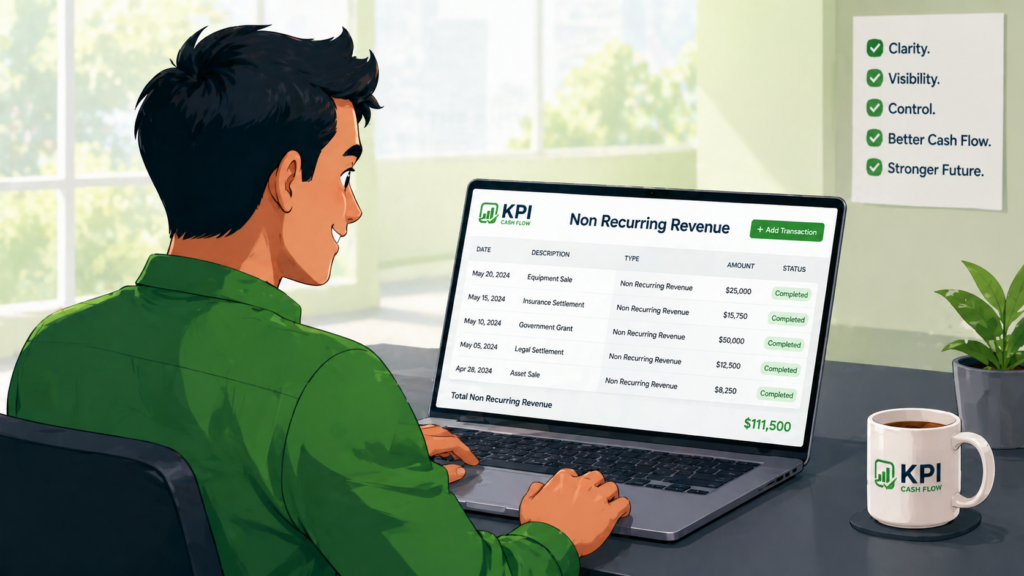
Build a simple rule into your financial reporting: flag every non-recurring item separately. Keep it out of your operating revenue line. When you are planning next year’s budget or deciding whether to hire, base those decisions only on revenue you can reasonably expect to repeat.
Ask, “Could this happen again next year if I make no changes?” If not, categorize it separately. Businesses that combine windfalls with recurring revenue often find themselves overspending unexpectedly.
Guideline #4 – Protect Your Margins Before Competition Forces You To
Shrinking margins signal increased competition. Matching every competitor’s price cut is rarely sustainable and rarely leads to long-term success.
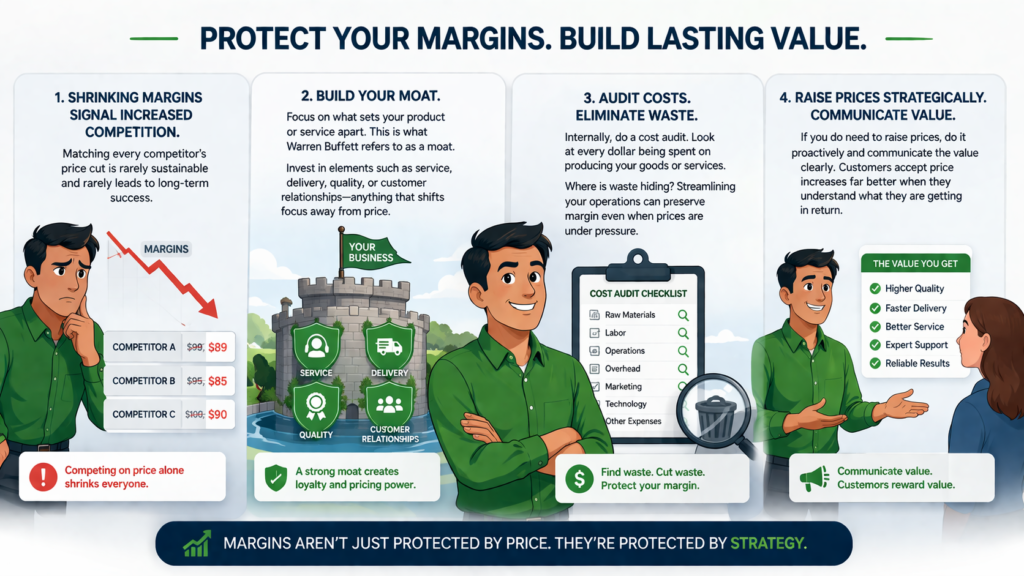
Focus on what sets your product or service apart. This is what Warren Buffett refers to as a moat. Invest in elements such as service, delivery, quality, or customer relationships—anything that shifts focus away from price.
Internally, do a cost audit. Look at every dollar being spent on producing your goods or services. Where is waste hiding? Streamlining your operations can preserve margin even when prices are under pressure.
If you do need to raise prices, do it proactively and communicate the value clearly. Customers accept price increases far better when they understand what they are getting in return.
Guideline #5 – Audit Your Expenses Quarterly
Expenses have a way of accumulating quietly. A software subscription here, a vendor contract there, a few extra headcounts hired in anticipation of growth that never materialized. None of these feels significant on its own, but together they can quietly eat your profit margin to nothing.
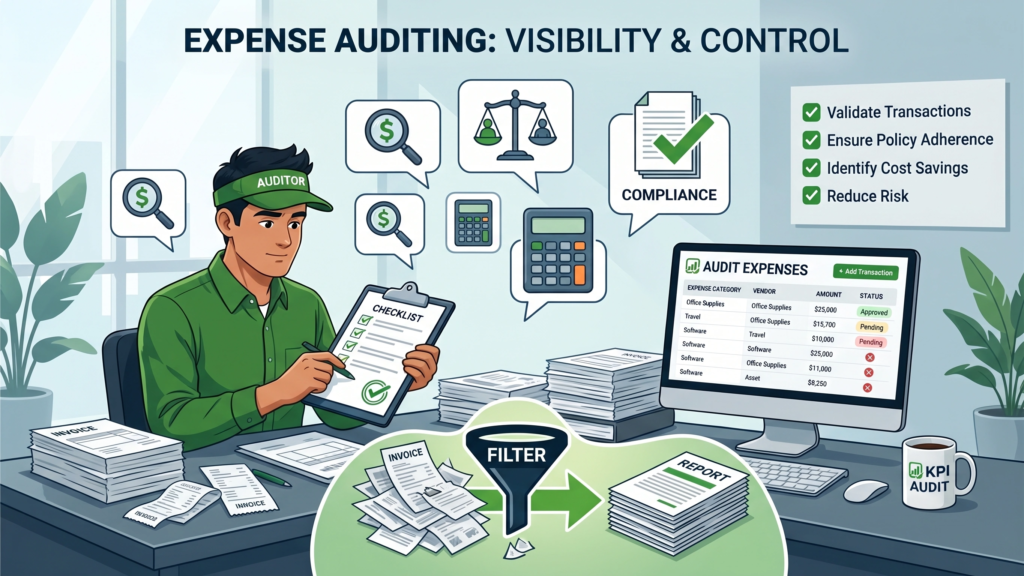
Schedule a formal expense review every quarter. Go through every recurring cost and ask a simple question: is this generating revenue, protecting the business, or serving a critical function? If the answer is no, cut it.
Monitor headcount carefully. Hiring in advance of confirmed demand can lead to excess payroll during slower periods and increase financial risk. Using contractors for peak needs and converting to permanent roles when demand stabilizes provides flexibility.
Guideline #6 – Manage Inventory with Data, Not Intuition
Piling inventory is often a symptom of optimism colliding with reality. Someone placed a large order, demand seemed to be rising, and so production ramped up. Then the sales slowed.
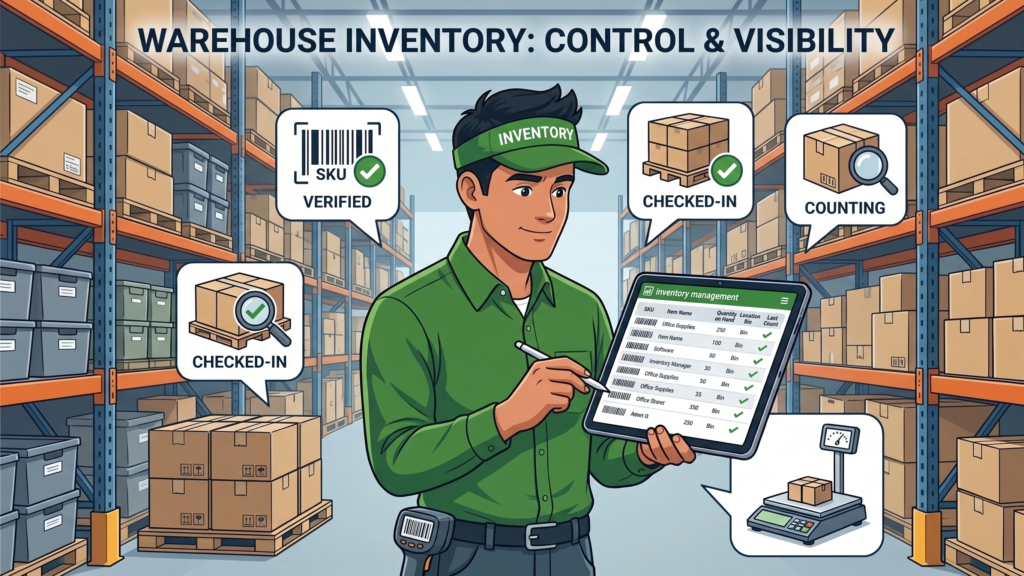
The fix is to move from gut-feel ordering to data-driven inventory management. Track your inventory turnover ratio regularly. Inventory turnover ratio is a measure of how many times your inventory is sold and replaced during a period, calculated by dividing cost of goods sold by average inventory. A declining ratio means your inventory is sitting longer, which is a problem worth addressing before it gets out of hand.
Use your sales data to set reorder points based on actual demand trends, not projections. For seasonal products, build a plan specifically for off-season periods. What will you do with excess inventory? How will you price it to move it? Having that plan ready in advance is far better than scrambling when shelves start to fill.
Guideline #7 – Build a Diversified Customer Base Intentionally
Landing a large client is genuinely exciting. But if that one client accounts for more than 25 or 30 percent of your revenue, you are carrying significant risk, even if the relationship feels rock solid.

Diversification rarely happens by accident. It requires a deliberate sales strategy that continues pursuing smaller and mid-size clients even after a big win. Keep your pipeline full. Keep your sales team focused on adding accounts, not just servicing the largest one.
Another useful tactic is to examine your large client relationships and find ways to deepen them across multiple product lines or departments. A client who buys three things from you is stickier than one who only buys one. It also reduces the risk that one person’s decision to switch vendors ends the relationship entirely.
If you currently have a client representing a dangerous share of your revenue, set a goal for what that percentage should be in 18 months and build a sales plan around it.
The Underlying Thread
You may have noticed something common across all seven solutions: they require you to measure things consistently and act on what you find. Most business problems do not arrive suddenly. They build gradually, quietly, until the numbers are impossible to ignore.
The businesses that catch these warning signs early are not necessarily smarter. They simply look more often and respond more honestly. Build that habit now, and a lot of the trouble described in the original article will never get the chance to take root.




Be First to Comment