
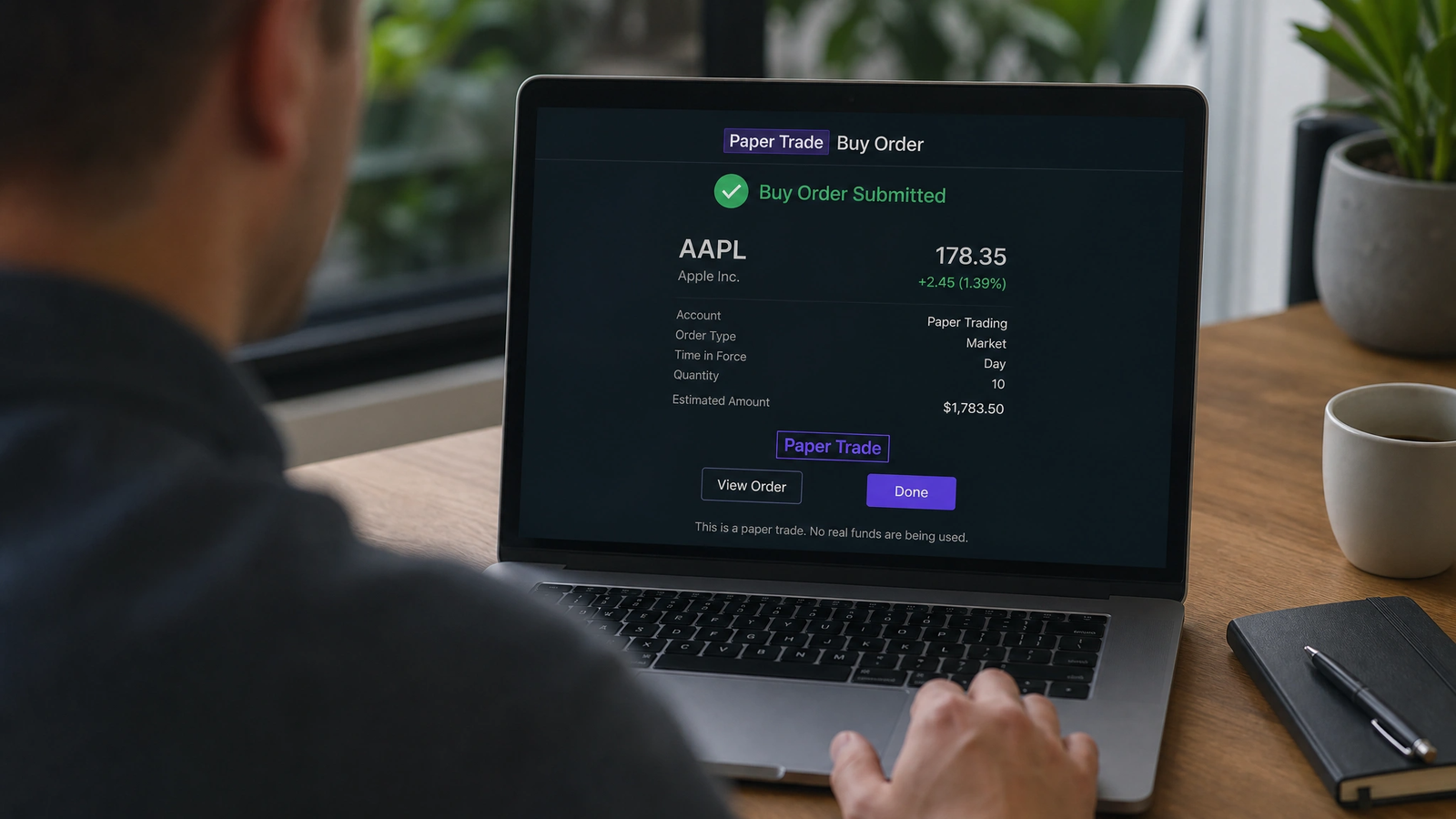
Everyone has an opinion on paper trading. Those who believe in the efficacy of the practice will tell you that you can learn the ropes of investing, so to speak. Proponents will tell you that it can never capture the essence of real trading. Which side is correct?
Essentially, both views are correct. You can learn the dynamics of investing as long as you know it does not capture the emotional swings of real trading. And that makes sense, since you react differently when you have real money pledged into the market. You feel the dips hard, and you are more elated by the surges.
Site owner may receive a commission for products purchased through links on this website.
Is Paper Trading Even Worth the Effort?
If you haven’t heard the term, you can set up a mock account with your brokerage or other services that offer paper trading platforms (like Investopedia.com), and you can start making faux trades. The advantage is that stocks are real and the prices are close to what you might pay for real trades. Further, the platform will keep track of your trades and how you are doing.
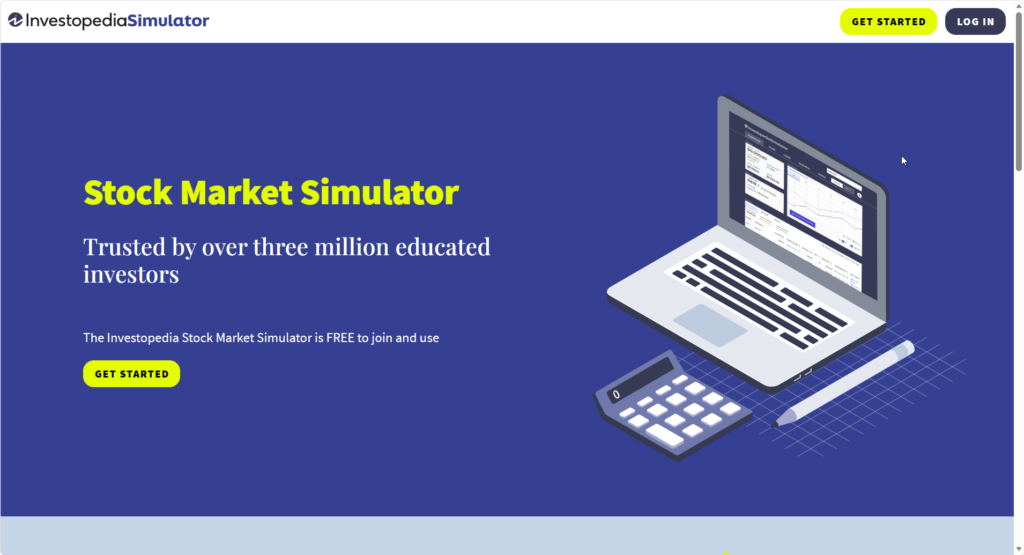
Some services, like Investopedia.com, even offer contests where you can win money if your portfolio performs the best over the allocated time of the contest. After you sign up for the platform, you create a portfolio (or a new contest, if that’s how you want to participate and they offer that feature). Then, you learn how to enter buy and sell orders, very much the way you would do it if you were trading real money.
As to whether paper trading is worth it, it will depend on a few factors:
- You are brand new to trading in the stock market and are apprehensive about using the trading platform.
- You want to test out certain strategies before committing real capital.
- You need to build a trading plan and develop the discipline to follow it.
- It helps you understand how much or little you know about investing.
Some drawbacks to paper trading include:
- It does not create the same stressful situation that real trading does, which means it is not emulating the true environment you would face when real money is on the line.
- A false sense of security. Suppose you did really well with paper trading. Does that mean you’ll do well when trading with real money? There is no guarantee of this success whatsoever. That’s why it’s important to understand the nuances of paper trading.
- Trade executions won’t match real trades. However, for popular stocks, you will likely come close.
- With paper trading, if things don’t go well, you can simply walk away from the account or close it out. That option is not available with real trades, unless you decide to move your money to another broker, which won’t necessarily help towards your success in trading.
Other Alternatives
Some investors like to use backtesting to test trades and techniques. While backtesting can be effective, it assumes that past price behavior will be repeated. Some patterns can and do repeat, but it is hardly ever an exact match. This fact can also lead to a false sense of accomplishment. If you pick up on a pattern that may have worked a few times in the past, you may be tempted to overextend the size of your trades to go for the “big win”.
If you decide to try backtesting, you’ll need data to work with. You can download historical price data on Yahoo Finance, but they constantly change the data points that they include (because they give free access). And I have seen instances where they completely removed access to financial statement data.
Another affordable option for data is Stock Analysis. I have been using them consistently for almost a year now. They keep adding new great features, and for most stocks, you can download several years of financial data (premium plans). If you decide to sign up for a premium plan, be sure to use the COUPON CODE FME for 10% off.
How to Implement Paper Trading
The following are guidelines that can help if you decide to implement paper trading into your financial routines:
- Set up your portfolio with a budget that matches your real budget. Although the emotions associated with paper trades are not the same as real trades, you can still get a feel for size positioning.
- Keep a log of your trades. If you discover methods that seem to be working, you’ll want to use them in your active trades.
- Continually understand that the trades will not have the same financial impact as real trades. I know we’ve been through this one several times, but it can’t be overemphasized.
- Have fun and continue learning.
- Join competitions when available. These contests often have decent cash prizes.
Paper trading is a useful tool that helps investors understand the trading process and gives a platform for testing ideas. Use it as a stepping stone towards better trading results, not as a substitute. Always continue to learn about investing (even outside of paper trading) and, when trading for real, use proper money management and position-sizing.





Be First to Comment