
Experienced with QuickBooks? A paid remote opportunity is seeking accounting professionals to evaluate bookkeeping workflows, identify inefficiencies, and help improve how accounting software supports everyday financial tasks.
NOTE: This post is for informational purposes only and provides general guidance about this opportunity. The company offering the project establishes all eligibility requirements, responsibilities, and terms, which may not be fully reflected here. While we have made every effort to provide accurate and comprehensive information, the details presented should be considered guidelines rather than a definitive description of the opportunity. Applicants should review the company’s official requirements before applying.
Want to skip the article and jump right to the opportunity? It contains similar information, and you can get started immediately (I may receive a finder’s fee if you work with them):
https://financialmarketseducation.com/accounting-quick-books
If you’re an accountant, bookkeeper, or financial controller with extensive hands-on QuickBooks experience, your knowledge could qualify you for an ongoing paid project focused on improving accounting workflows.
This remote opportunity involves working directly with QuickBooks, performing accounting-related tasks, and documenting areas where existing processes could become more efficient.
Unlike a traditional accounting position, the emphasis is not simply on completing transactions or producing financial reports. Participants will also evaluate how efficiently those tasks can be performed and provide feedback that may help improve accounting workflows at scale.
What Is the QuickBooks Workflow Evaluation Project?
The project focuses on evaluating and optimizing QuickBooks workflows used by accounting professionals.
QuickBooks is widely used for bookkeeping, transaction management, financial reporting, and other accounting activities. However, even familiar software can involve repetitive tasks, inefficient processes, or workflows that could be improved.
This initiative aims to gain insights from professionals who regularly work with accounting software and understand the practical challenges involved.
Selected participants will navigate QuickBooks modules, process transactions, manage financial records, and document their experiences.
The feedback collected will help identify bottlenecks and opportunities to streamline accounting processes.
What Will Participants Do?
This is a hands-on project that requires familiarity with QuickBooks and the ability to critically evaluate accounting processes.
Participants can expect to perform several activities:
- Evaluate QuickBooks workflows: Navigate commonly used accounting modules and assess how efficiently routine tasks can be completed.
- Process accounting transactions: Work with financial records and transaction-processing workflows within the software.
- Identify inefficiencies: Document repetitive steps, unnecessary software interactions, and other workflow bottlenecks.
- Provide written feedback: Explain where processes could be improved and how changes might benefit accounting professionals.
- Collaborate remotely: Participate in asynchronous activities and communicate findings without requiring a traditional office environment.
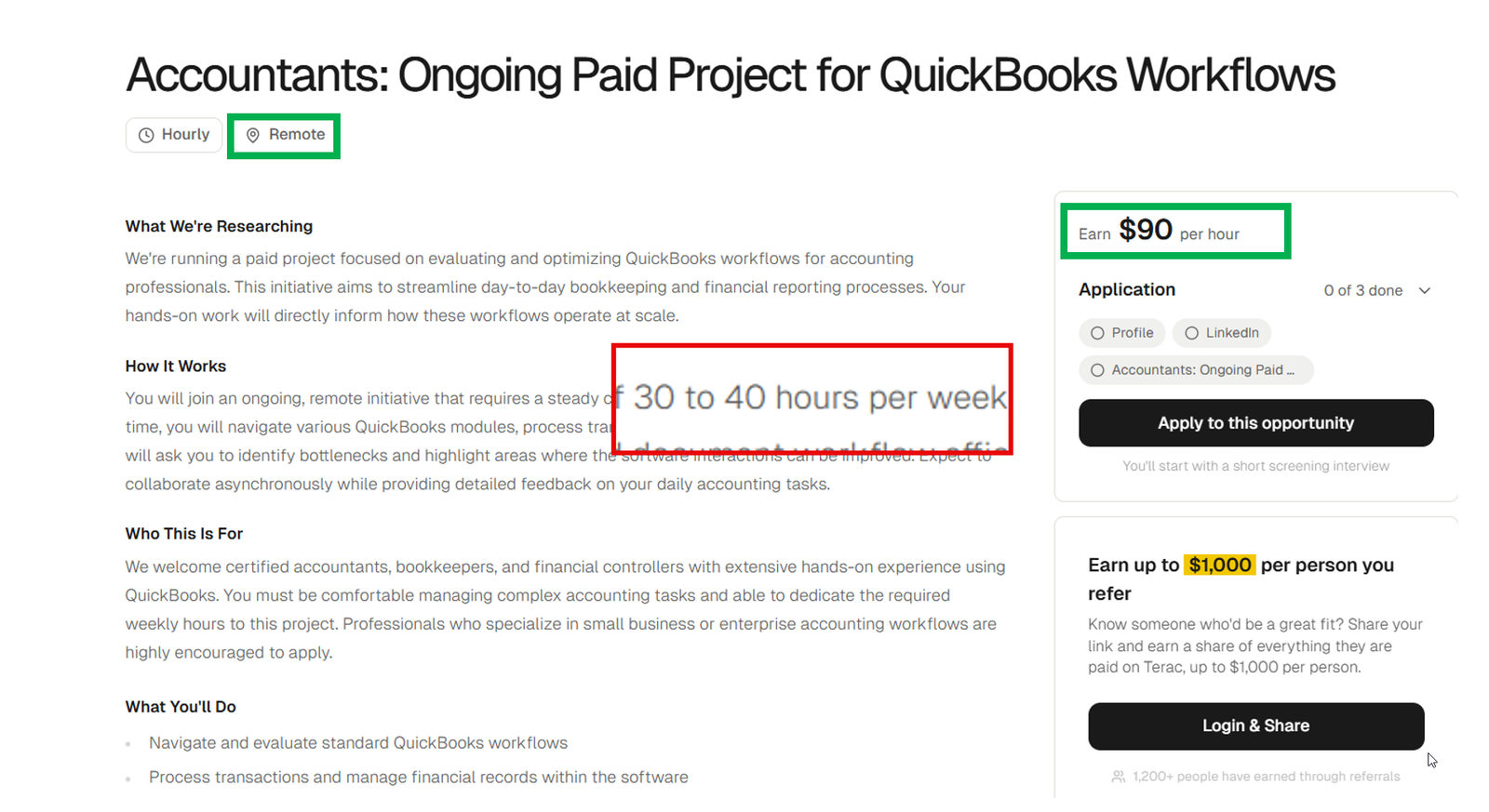
The project calls for approximately 30 to 40 hours per week, making it more substantial than a short survey or one-time research interview.
Who Is Eligible to Apply?
The opportunity is intended for experienced accounting professionals who regularly use QuickBooks in their work.
Potentially qualified applicants include:
- Certified accountants with practical QuickBooks experience
- Professional bookkeepers managing business financial records
- Financial controllers familiar with accounting operations
- Accounting professionals specializing in small-business bookkeeping
- Professionals experienced in complex accounting and financial reporting workflows
Applicants should be comfortable working independently, documenting their observations, and explaining how accounting processes could be improved.
Strong hands-on experience is especially important. This project seeks professionals who understand not only how to use QuickBooks but also how accounting workflows operate in real business environments.
Three QuickBooks Workflow Habits Worth Understanding
A particularly important part of evaluating accounting workflows is understanding how professionals organize tasks, use reports, and navigate between different systems.
Three useful practices illustrate the type of operational thinking relevant to this project.
1. Name Saved Reports After the Decisions They Support
Rather than saving reports with generic names, accounting professionals can organize reports around the business decisions those reports are intended to inform.
For example, a report used to evaluate overdue customer balances might have a name reflecting collections priorities rather than simply “Accounts Receivable Report.”
This approach can make saved reports easier to identify and connect financial information to specific business decisions.
2. Track Tasks That Require Leaving the Accounting Software
Not every accounting activity can be completed entirely within QuickBooks.
Professionals may need to consult spreadsheets, retrieve supporting documents, communicate with colleagues, or access information stored in another system.
Tracking these interruptions can help reveal workflow inefficiencies and identify opportunities to reduce unnecessary switching between applications.
3. Compare Task Order Across Different Company Accounts
Accounting workflows may differ depending on the company, its transaction volume, and its operating procedures.
Comparing the order in which similar tasks are performed across different company accounts can reveal inconsistencies, unnecessary steps, and opportunities for standardization.
For example, examining how different businesses approach transaction categorization, reconciliation, and reporting may help identify more efficient sequences.
Applicants should be prepared to explain these three habits when discussing their workflow experience during the application or interview process. Responses should accurately reflect their own professional knowledge and experience.
Is This a Remote Position?
Yes. The project is described as fully remote, with participants able to complete their work on their own schedules.
However, the expected commitment is significant: approximately 30 to 40 hours each week.
This may appeal to accounting professionals who prefer remote contract work and have sufficient availability for an ongoing project.
Because collaboration is asynchronous, participants should also be comfortable communicating through written updates and documenting their work independently.
How Does Compensation Work?
The opportunity is structured as an hourly, independent-contractor engagement.
According to the project description:
- Participants are paid weekly based on services rendered.
- Work is performed remotely.
- The engagement is ongoing but may be extended, shortened, or ended early based on project needs and performance.
- Participants are responsible for fulfilling the expectations of an independent-contractor arrangement.
The published description does not specify an hourly pay rate. Applicants should review the compensation details presented during the application process before accepting an engagement.
The project also states that it cannot support H1-B or STEM OPT candidates at this time.
Will You Need to Share Confidential Client Information?
No. The project description explicitly states that participation will not involve access to confidential or proprietary information belonging to an employer, client, or institution.
This distinction is important for accountants and bookkeepers who regularly handle sensitive financial records.
Participants should follow the project’s instructions and maintain appropriate confidentiality standards throughout the engagement.
Why Might This Opportunity Be Interesting?
For experienced QuickBooks users, this project offers a way to apply accounting knowledge beyond traditional bookkeeping responsibilities.
Instead of focusing exclusively on producing financial statements or processing transactions, participants will help evaluate the underlying workflows that make those activities possible.
The opportunity may be especially appealing to professionals interested in accounting technology, business process improvement, and financial operations.
It also provides an example of how specialized professional experience can be valuable in software evaluation and workflow research.
How to Apply
If you have substantial QuickBooks experience, are comfortable evaluating accounting processes, and can commit approximately 30 to 40 hours per week, this opportunity may be worth exploring.
Before applying, consider whether you can clearly describe your experience with QuickBooks, the types of accounting tasks you regularly perform, and how you identify inefficiencies in financial workflows.
Be prepared to discuss practical habits involving decision-oriented report naming, tracking tasks that require leaving the accounting software, and comparing task sequences across different company accounts.
Interested in participating?
View the QuickBooks Workflow Project and Apply Here:
https://financialmarketseducation.com/accounting-quick-books
Review the full project requirements, compensation details, and application instructions to determine whether the opportunity matches your qualifications and availability.
Important Disclosure
Affiliate Disclosure: This article contains an affiliate link. We may receive compensation if you use our link to access the opportunity or complete a qualifying action, at no additional cost to you.
Opportunity Disclaimer: This article is provided for informational purposes only and is based on the project description available at the time of publication. Application requirements, compensation, availability, and project duration may change. Applying does not guarantee acceptance, an engagement, or payment.




Be First to Comment